control. Education. prosperity.
Promoting the ultimate solution for the Gaza Strip
The day after the war.
introduction
The disengagement plan implemented by the Israeli government in 2005 consisted of two layers: the prominent layer – the ground disengagement and the removal of settlers and IDF forces from the Gaza Strip, caused an uproar and is controversial to this day; but the hidden layer – the mental disengagement, and the removal of Israel's responsibility from the present and future from the Strip – was received in a manner Quite inclusive, and this despite the fact that in the 18 years that have passed, the strip has has proven time again and time again that as far as it is concerned – it has not cut itself off from us.
The situation has not changed
From an economic and sanitary point of view, the situation in the Gaza Strip is sub-par. Two million people live in an area less than 400 square kilometers in size, with an ever-increasing population density.
The political government – the terrorist organization Hamas – devotes most of its efforts to the fight against Israel, and decrees a continuous war and a 16-year siege on the Gaza Strip's occupants.


Almost half of the residents of the Gaza Strip are under the age of 20 and do not know any other reality.
The younger generation does not see an optimistic future in their lives in the Strip, and has been led to believe due to intense Hamas propaganda that the fight against Israel is the only choice – an agenda that is becoming more and more extreme – and we experienced its devastating results for us on October 7th.
The State of Israel has dealt with the Strip in a tactical manner until today, and this is reflected in the rounds of fighting that broke out when Hamas 'exaggerated' its actions. There were no long-term plans for the future of the Strip, or for Israel's ambitions regarding it.
The surprise attack on the 7th of October, which included a deadly massacre on a level that had never been seen in Israel, completely destroyed the cards. At this time, there is a consensus across the security leadership, and among the Israeli people, that the Hamas regime must be overthrown and its military capabilities must be completely destroyed. The move is important and even crucial at this time. But the most important question hasn’t been asked: what will happen the day after?
We are facing a historic opportunity to change the reality in the Gaza Strip for the long term, on all levels. If we miss this opportunity, it will be the continuation of the destructive policies of the last two decades.
Perhaps in the short term the strip will not be a threat, but in the long term the elements that created the problem will not change, so in the long term the elements that created the problem will not change, so we cannot expect a real change in reality, and the challenges we have faced up to now will return to haunt us all over again.
The shock doctrine

About 15 years ago, Dr. Naomi Klein published her famous book, 'The Shock Doctrine', as a critique of the conduct of Western countries in the face of crises in second and third world countries. This critique is not relevant to our case, but the guiding line of the book certainly is: 'shock' events in the Large populations constitute a fertile and convenient ground for external factors to intervene and change social and economic reality. This 'shock' can be an environmental disaster, mass death, or the collapse of reality and government; the 'Iron Swords' war, which has been going on in the Gaza Strip for over a month, may to be the 'shock' required for the population of the Gaza Strip to lead to a change of mindset.
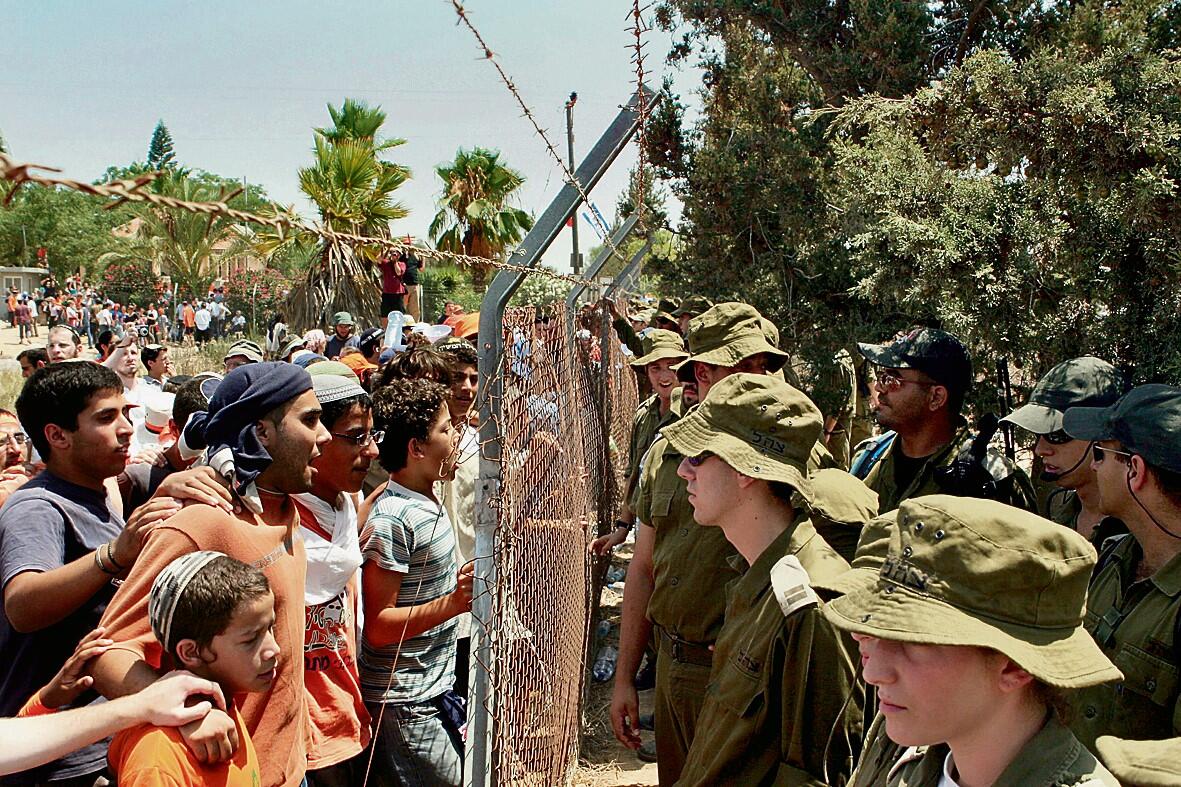
Mindset is definitely the key word. When the starting point of the Gazan population is that the conflict with Israel is the goal for which the greatest number of means must be devoted, that this conflict is justified from a value and religious point of view, and that there is no chance of creating a better reality within the framework of cooperation with Israel, or a framework for creating a relationship of trust with it. With Hamas in power, it seems that there is no easy way to lead to a change of mind in the Strip, which would be necessary for the beginning of any peace process or change (with the exception of attempts to influence from the outside, such as a campaign on the networks, or dropping flyers, products, etc.). But now, since the State of Israel has defined the destruction of Hamas as the goal of its war, this obstacle may be removed.
What might happen after the overthrow of the Hamas government?
At the moment, there are several options circulating in the discussion rooms and public discourse:
A renewed withdrawal from the Strip, without an attempt to create a new governmental framework, and a new and more successful fortification of the Strip's borders with Israel.
In the governmental vacuum that will be created in the Gaza Strip, an even more extreme party (such as the GAP) may come to power, and this will not at all constitute a strategic change in the Israeli approach - but a (admittedly strong) continuation of the tactical trend that has accompanied us until now ('mowing the grass').
Military occupation of the Gaza Strip, similar to areas C in the Palestinian Territories. Building settlements is also a possibility.
Let's recall that this is the reality that prevailed in the Gaza Strip until the disengagement - when then it was perceived as clearly intolerable. Such an occupation may be expensive and challenging, in terms of money and human lives.
The re-establishment of the Palestinian Authority in the Gaza Strip, similar to areas A in the West Bank.
Let's recall that this is the reality that prevailed in the Gaza Strip between 2005-2007, which did not manage to last. It should be recognized that the Palestinian Authority (whose future is also clouded) does not have much support among the local population.
The evacuation of the Gazan population to Sinai, and the annexation of the Strip. This is the recommendation produced in a policy paper recently published by the Ministry of Intelligence.
Beyond the Egyptian opposition to the move, its perception is recognized in the world as actual ethnic cleansing and the storm that the move will cause in Arab countries as a 'second Nakba' - to name one interesting possible outcome.
'Foreign administration’ for Gaza - creation of an international governing framework (under the auspices of the UN or another Arab country).
A temporary but unsustainable idea over time; In addition, there is currently no organization or country interested in sponsoring the strip and its residents.
Establishing a local independent governing framework in Gaza, which is not connected to or derived from the Palestinian Authority.
Idea F seems on the surface to be the most practical option, but requires the creation of a significant change on both levels: on the level of consciousness and on the economic level. If the Strip remains poor and its residents have nothing left to lose, and if the struggle against Israel is left at the forefront of Gazans' minds, the new government will not differ much from the one that exists today.
What do we offer?
First of all, get to know the "Marshall Plan"...
Marshall Plan
These changes, of mindset and of the economy, will result from each other and feed each other. The final ambition is to create a good and stable enough economic situation in the Gaza Strip for a 'détente' to be created – a basic coexistence, when the Gazan population realizes that it is not worthwhile for them to try to return to the Gaza approach while under Hamas control.
Although Gaza is small and lacks natural resources (except, perhaps, potential offshore gas), its population has a basic economic potential that is not close to being realized in the current situation, and in combination with huge external investments (the USA, Qatar, etc.), a utopian economic vision for the Strip will be possible, which will pay off Both for the State of Israel and for the residents of the Gaza Strip.
The inspiration for this double change, mental and economic, Israel should take from the policy of the Allies towards Germany and Japan after the loss in the Second World War in 1945…

After the war, both were battered and bruised, with millions of civilians dead, entire cities completely destroyed. A shattered economy and political framework, and a population in crisis. Throughout history, most countries were happy to see the downfall of their enemies, and did not rush to help them recover, with the aim of exploiting the victory for the longest time. But this is not how the USA behaved after the war, when it decided to invest the best of its money in the long-term reconstruction of occupied Europe and destroyed Japan – and this mainly for economic and geo-strategic considerations (toward the Cold War).

Against Germany, this was reflected in two plans. The economic 'Marshall Plan', and the social 'De-Nazification Plan'. As part of the Marshall Plan (named after George Marshall, the American Secretary of State), the US invested hundreds of millions of dollars in the rehabilitation of Germany's economy, and in the construction of its destroyed cities.
At the same time, as part of de-Nazification, the USA and its allies purged the ranks of the public from prominent Nazis (when the political leaders were put on trial, and sentenced to long years in prison, and even to execution). Low ranking Nazis were forced to take courses and basic lessons in the values of democracy, and were allowed to return to their position only after they were diagnosed as unaffiliated with the Nazi Party. Indeed, the plans bore fruit, and in the following years the 'economic miracle' of Germany took place, in which the economy grew at a rate of tens of percent per year. In 1949, West Germany was founded as a functioning democracy, which over the years became a more liberal one, and today is an integral part of the Western countries.
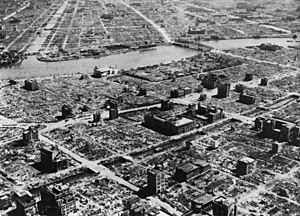
In Japan, the USA controlled military control for 6 years. The matter of change of mindset in Japan was simpler. After the USA learned to separate the emperor, the bureaucracy and the army. In the years before the World War, the emperors were weak and subject to the influence of the army, whose representatives therefore increased their influence on all the state's systems and dominated it with an uncompromising militarism. The Americans left the emperor in his position, while understanding his traditional and symbolic meaning in the eyes of the Japanese people, left most of the political echelon in place, and almost completely neutralized the army (while pledging to take on most of Japan's security burden, to a large extent to this day) and its influence on the country and society. Along with increasing democratic awareness in the country through the education system, the US managed to create a significant cultural and social change in Japan, which transformed from one of the most militaristic countries to an economy-focused country. In 2000, the US was the largest economy in the world. In second place was Japan, and in third place was Germany, both loyal allies of the USA.

The opposite lesson can also be learned from the US: after the occupation of Iraq in 2003 as part of the second Gulf War and the overthrow of Saddam Hussein (the leader of the Ba'ath Party), the US tried to create social and economic change in Iraq, and turn it into a democracy with a prosperous liberal economy. To create social change, the US carried out de-Baathification, fired tens of thousands of civil servants and public service, and dismantled the Iraqi army (which was one of the largest in the world at the time). These moves led to hundreds of thousands of unemployed men on the streets of Iraq, who had difficulty finding new work within the framework of the economic changes made by the US at the time in Iraq (about which you can read more in the book mentioned above, 'The Shock Doctrine'). In general, it was a strong policy of privatization and international outsourcing, which caused a lot of unemployment in the short term and generally failed in the long term.) This led to instability in the new Iraqi state, many of the young people were drawn to terrorism and resistance, the economy could not stand up, and a 'vicious circle' of instability was created. By 2011, the US withdrew from the new Iraqi state And the failure, which quickly deteriorated into a deadly civil war, the rise and fall of ISIS, and finally the current situation – Iraq as a protege of neighboring Iran.
The State of Israel should bring its own 'Marshall Plan' to the Gaza Strip, to restore the great destruction caused by the war on Gaza, and at the same time introduce a policy of 'de-Hamasization' – and neutralize the influence of Hamas on the population.
The day after
We must understand that this is a historic opportunity in which it is possible to change the future of the Gaza Strip forever.
The "Sixth Option" plan, which we put together, members of the intelligence community in the past and present, consists of several stages of implementation according to the main points of the plan:
rehabilitation
Rebuilding Gaza after the destruction caused by the war.
economic infrastructure
Raising huge investments from the Western countries and Gulf countries and establishing large economic infrastructures (such as factories and tourism industry).
Change of mind
Recruiting the Gulf countries for a campaign to change the mindset of the citizens in the Gaza Strip while emphasizing a utopian future in which the Gaza Strip becomes a healthy and prosperous economy, thus engaging the younger generation into the job market.
The revival of Hamas
Arrest and removal of Hamas terrorists who will be left alive after the war and holding show trials for the world to see.
Explanation
Recruiting the Western countries to a campaign to change consciousness towards Hamas. The image of the Hamas organization as a charitable and religious institution in the eyes of some residents of the Gaza Strip and the world must disappear.
טיפול כירורגי במינהלת החמאס
הדרג המינהלי של חמאס דורש טיפול מדוקדק ובחינה אינדיווידואלית - מחלקם יהיה חשוב להיפטר ואת חלקם יהיה קריטי להשאיר;
Education
Strong control over the Gaza education system, prevention of incitement against Israel and Jews, support and encouragement in the new governmental framework and the economic vision for the Strip.
The expected results of the program are:

Improving the standard of living in the new Gaza
Hundreds of thousands of new jobs, a significant increase in the standard of living of the citizens, leading to the inevitable rejection of every remnant of Hamas rule.

Israeli rule and future
A new civil government under Israel, control of the curriculum and changing the mindset of the next generation in the Gaza Strip.

Economic development model
3. Creating a model that opens up the possibility of external investments in the new Gaza economy for entrepreneurs from Israel and the world - which will create an economic development cycle.
The bottom line: We believe that in order to change the future of the Gaza Strip we must change the mindset of the citizens in the Gaza Strip.
Pursuing only the collapse of the Hamas regime without having an alternative vision in mind will give rise to another similar regime, or worse.
Therefore, we assembled reserve officers along with members of the intelligence community and put together a plan: for in-depth processes to change the general mindset, alongside the acceleration of significant economic processes in the Gaza Strip.
We believe that a mental process alongside an economic process can build a different future that will pay off both for the State of Israel, and for the citizens of the Strip, and thus, leave a different reality for the next generation.
Be partners with us in promoting the project!
in sharing
in social medias or in any way you want →
with a financial donation
To expand the education and outreach activity
(Please specify for the "The Day After" project) →
discussion
We would love to hear your opinion. Write to us! →
discussion
We would love to hear your opinion. Write to us! →
